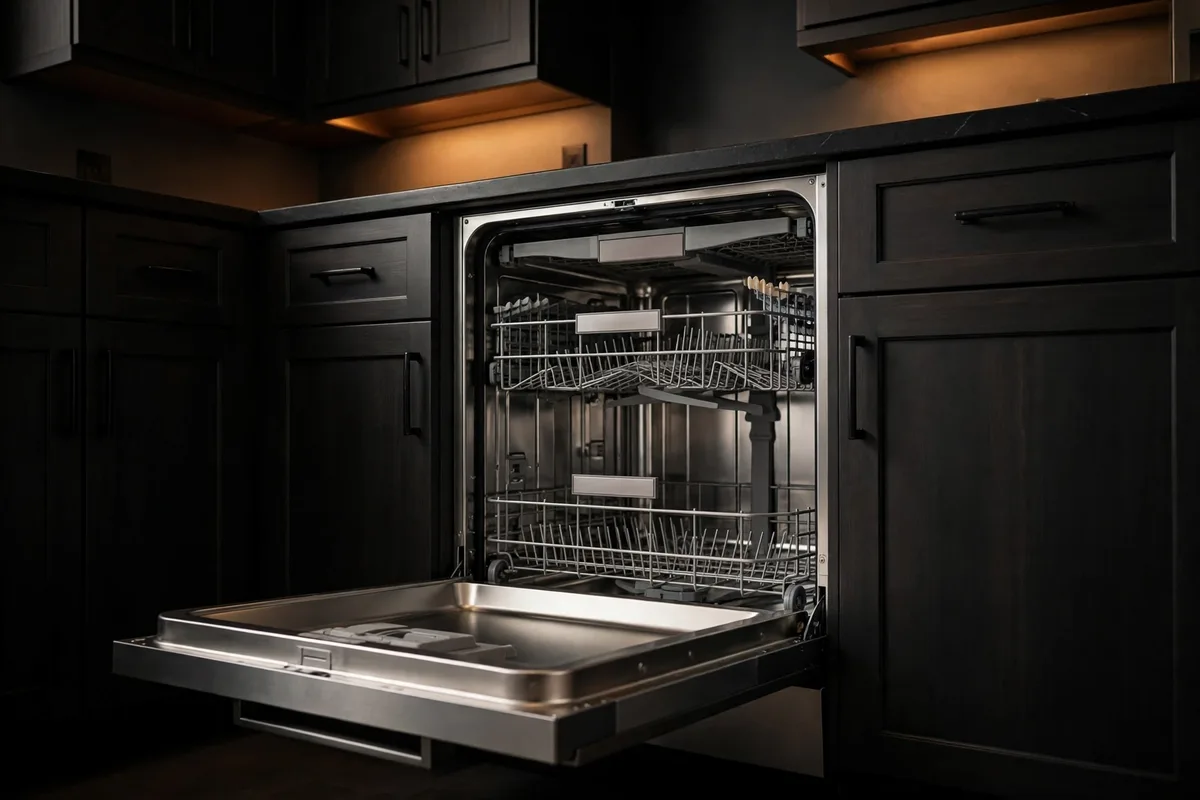
Dishwasher Repair in San Jose, CA
Dishwasher not draining, leaking or leaving dishes dirty in San Jose? Find local dishwasher repair help - all major brands. Call today.
Learn more →A garbage disposal that hums without grinding, jams, or leaks under the sink is a common kitchen problem. Many faults come from an object caught in the grinding chamber, a tripped overload, or a worn seal. This page explains the common symptoms, the safe steps you can take, and when to request assistance from a qualified repair professional in San Jose.
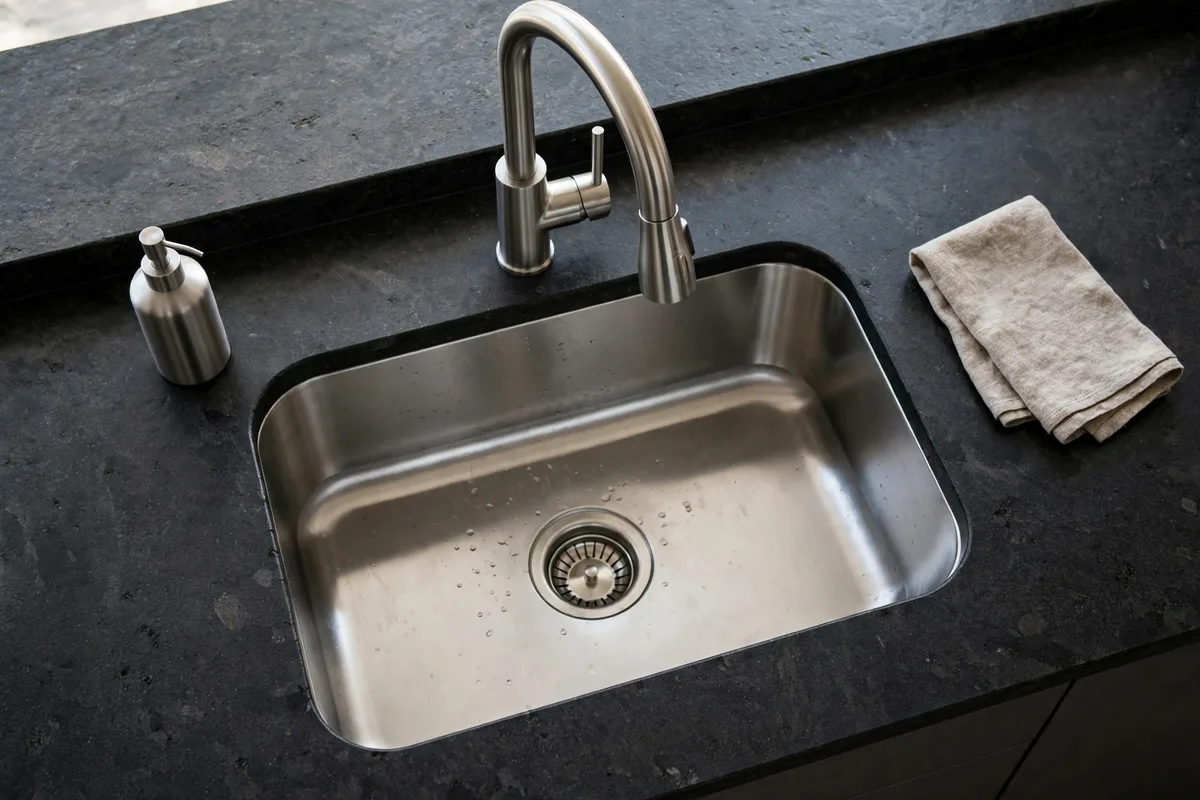
A garbage disposal sits under the sink and grinds food waste with a spinning plate and impellers, flushing the ground waste down the drain with running water. A motor drives the plate, and an overload protector trips if the motor stalls. The unit connects to the sink flange above and to the drain pipe below, with seals at each joint. When it jams, hums, or leaks, the fault usually involves the grinding chamber, the motor, or one of those seals.
A disposal that does not turn on at all may have a tripped overload button, a tripped circuit breaker, a faulty wall switch, or a power supply problem. Pressing the reset button on the bottom of the unit, after switching it off, sometimes restores operation. If the reset button trips again immediately, or the unit still does not respond, the motor or the wiring may need attention. Electrical work should be left to a qualified repair professional.
A humming sound with no grinding usually means the motor is powered but the plate cannot turn, often because an object is caught in the chamber. Switch the disposal off at once and never put a hand inside the chamber. Many models have a hex socket on the bottom that accepts an Allen wrench to turn the plate manually and free a jam. If the plate still will not turn, or the humming continues after the jam is cleared, the motor may need testing.
Leaks can come from the sink flange seal, the dishwasher connection hose, the drain pipe connection, or the body of the disposal itself. Water dripping from the top of the unit often points to the flange seal, while water from the side connections points to a hose or drain fitting. A leak from the bottom of the unit often means an internal seal has failed, in which case replacement is usually the practical option. A repair professional can trace the leak and explain the repair options.
The reset button, also called the overload protector, trips when the motor overheats or stalls. Pressing it after the motor has cooled can restore operation, but repeated tripping points to a deeper fault. Motor faults can show up as humming, slow grinding, or a burning smell. Electrical faults, such as a damaged power cord or a faulty switch, should be handled by a qualified repair professional, since the unit combines water and electricity under the sink.
When a disposal leaks from its body, grinds slowly despite a clear chamber, or trips the reset button repeatedly, replacement may make more sense than repair. A repair professional can explain the options based on the age and condition of the unit. For safe use, run cold water before, during, and after grinding, feed waste gradually, and avoid putting grease, coffee grounds, fibrous foods, or hard objects such as bones and bottle caps into the disposal.
Request assistance when the disposal hums without grinding, leaks water, trips the reset button repeatedly, or does not turn on after the breaker and reset have been checked. Request help promptly if there is a burning smell or water leaking onto the cabinet floor. Repair help covers major household brands commonly found in San Jose homes, including InSinkErator, Moen, Waste King, Whirlpool, GE, and Frigidaire, among others.
Repair professionals may work on major appliance brands including Samsung, LG, Whirlpool, GE, Maytag, Frigidaire, KitchenAid, Bosch, Kenmore, and others. Brand and model support varies by location — see the full brand list.
Information and service connections are available across San Jose, California. See the San Jose service areas page for neighbourhoods and ZIP codes covered.
The motor is powered but the plate cannot turn, usually because an object is caught in the chamber. Switch it off at once and never put a hand inside. A repair professional can free the jam safely if the manual method does not work.
Hard objects, fibrous foods, or a buildup of waste can jam the grinding plate. Switch the unit off, then use the hex socket on the bottom to turn the plate if your model has one. If it still will not turn, request assistance.
Leaks can come from the sink flange, a hose connection, the drain pipe, or an internal seal. The location of the drip helps identify the source. A leak from the bottom of the unit often means the internal seal has failed.
The reset button is usually a small red or black button on the bottom of the unit. Press it after switching the disposal off and letting the motor cool. If it trips again immediately, request assistance rather than pressing it repeatedly.
Repeated tripping can point to a jam, a failing motor, or an electrical fault. Clear any jam and let the motor cool before resetting once. If it trips again, a repair professional can test the motor and wiring.
No. Never put a hand inside the grinding chamber, even when the unit is switched off. Use tongs or pliers to remove an object, and request assistance if you cannot reach it safely.
Dishwasher not draining, leaking or leaving dishes dirty in San Jose? Find local dishwasher repair help - all major brands. Call today.
Learn more →Find repair help in San Jose for Whirlpool, Samsung, LG, GE, Maytag, Bosch, KitchenAid and more major brands. See the brands we service.
Learn more →Need appliance repair in San Jose? Call or send a service request — tell us the appliance, brand and problem and request local help.
Learn more →Explore the relevant appliance service or check whether your ZIP code is included in current service coverage.